
As a mentor, you've made a generous commitment to someone else's growth, offering your time, experience, and energy. That shouldn't be taken for granted. While we encourage all mentees to drive the relationship, there are things you as a mentor can do to make the experience productive and rewarding for both of you.
What makes a good mentor?
A good mentor listens actively, shares experience without prescribing answers, helps their mentee set meaningful goals, and creates a safe space for honest conversation. The best mentors don't do the work for their mentee, they guide, challenge, and support them to develop the skills and confidence to progress on their own.
What are the key qualities of a great mentor?
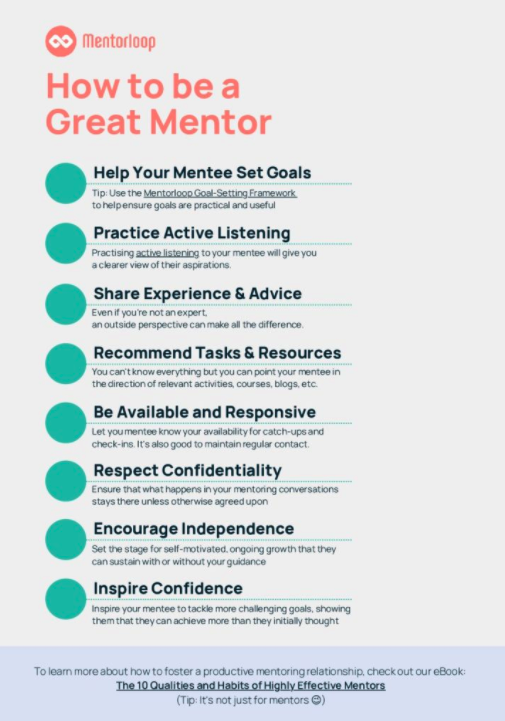
These eight qualities consistently show up in the most effective mentoring relationships:
1. Help your mentee set goals
Goal setting gives your mentoring relationship direction. Without clear goals, sessions can become unfocused catch-ups rather than development conversations. Work with your mentee to set SMART goals, Specific, Measurable, Attainable, Relevant, and Time-bound, and revisit them regularly. In Mentorloop, you can track shared goals with tasks and due dates so progress is visible to both of you.
2. Practise active listening
Active listening means giving your mentee your full attention, not just waiting for your turn to speak. Ask open-ended questions, reflect back what you hear, and resist the urge to jump straight to solutions. Practising active listening gives you a clearer understanding of your mentee's aspirations, challenges, and thinking, which makes your guidance far more relevant.
3. Share your experience and advice
Your lived experience is one of the most valuable things you bring to the relationship. Share stories from your own career, the successes, the setbacks, and the lessons you learned along the way. Even if you're not an expert in your mentee's specific area, an outside perspective can make all the difference. Frame advice as options rather than instructions: "Here's what worked for me" is more empowering than "Here's what you should do."
4. Recommend tasks and resources
You can't know everything, but you can point your mentee in the right direction. Recommend books, articles, podcasts, courses, or people worth connecting with. Where possible, suggest specific actions, "Read this chapter and let's discuss it next session" is more useful than a vague reading list. Use Mentorloop's Notes feature to share resources and capture agreed actions.
5. Be available and responsive
Let your mentee know when you're available for catch-ups and check-ins, and keep to that commitment. Regular, reliable contact builds trust. If you need to reschedule, let them know as early as possible, being stood up by a mentor can be discouraging, especially for someone who's put themselves out there. Use Mentorloop's scheduling tools to book sessions and keep the cadence going.
6. Respect confidentiality
What's discussed in your mentoring conversations stays there unless you both agree otherwise. Establishing this early creates the psychological safety your mentee needs to be open about their challenges, ambitions, and uncertainties. If your mentee shares something sensitive, acknowledge it and respect the trust they're placing in you.
7. Encourage independence
The goal of mentoring is to set the stage for self-motivated, ongoing growth that your mentee can sustain with or without your guidance. Avoid creating dependency. Instead of solving problems for your mentee, coach them through the thinking process. Ask: "What have you already considered?" before offering your view. Over time, you should see them needing less direction and making more confident decisions on their own.
8. Inspire confidence
Help your mentee see that they can achieve more than they initially thought. Encourage them to tackle more challenging goals, take on stretch assignments, and step outside their comfort zone. Acknowledge their progress, celebrate their wins (big and small), and remind them of how far they've come when they're feeling stuck.
Download the cheat sheet below for a quick reference you can keep on hand:
How can I be a better mentor in Mentorloop?
Mentorloop gives you tools to put these qualities into practice:
- Goals: Set and track shared goals with your mentee so you both know what you're working towards and can measure progress.
- Notes: Use shared notes to capture key takeaways, agreed actions, and resources after each session.
- Meeting agendas: Pick from six meeting agenda templates to keep your sessions focused and productive.
- Scheduling: Book your next session from within your Loop so there's always a meeting on the calendar.
- Chat: Use the in-loop messaging to check in between sessions, share a quick resource, or offer encouragement.
How do I learn more about being a great mentor?
For a deeper dive, complete the Mentor and Mentee Training Course on the Mentorloop Academy. The course covers the 10 key qualities and habits of highly effective mentors, your role as a mentor including practical steps, how to use Mentorloop's tools effectively, and how to adopt a mentoring mindset. It's self-paced, so you can work through the modules in order or jump to the sections most relevant to you.